


Presentation Creation
Tired of spending hours crafting presentations, only to feel like they fall flat? You’re not alone. Many struggle to balance compelling content with engaging design, especially when time is short. That’s where AI presentation tools come in. These AI-driven tools streamline every step of creating slides: from brainstorming ideas to polishing visuals. Join us as we explore the best AI presentation tools in 2026 and share practical tips to turn your presentations from ordinary to extraordinary.

What are AI presentation tools?
AI presentation tools, or
AI presentation makers
, are transforming how we create presentations. These tools use artificial intelligence to streamline the process, from generating initial ideas to finalizing the design. Think of them as your personal presentation assistant, helping you create polished, professional decks in a fraction of the time. They offer features like automated slide layouts, content suggestions, and even formatting assistance, ensuring your presentations are visually appealing and engaging.
Prezi's AI
features, for example, can help you quickly transform your ideas into a dynamic and visually compelling presentation.
List: The 10 best AI presentation tools in 2025: tl;dr
- Prezi AI: The best AI presentation maker overall. Creates dynamic presentations that make you stand out.
- Visme: Works for data-driven, interactive presentations.
- Plus AI: Works directly in PowerPoint and Google Slides.
- Canva: Makes fast professional visuals. Not the best for presentation making.
- Google Slides: Mainly used by enterprise users.
- Gamma: Better for creating documents and files.
- Beautiful.ai: Content fits into a large library of templates, rather than creating unique presentations.
- Microsoft Copilot: Helps to summarize emails, draft documents, and make reports.
- Presentations.AI: Creates simple, basic presentations.
- Pitch: Made for teams.
AI Presentation Tool Comparison: Features, Output & Pricing (2026)
We tested each tool with the same prompt to compare first-draft quality, design output, iteration capability, and export reliability.

Same Prompt, Different Results: What Each Tool Actually Produces
We used the same prompt across every tool: "Create a marketing strategy presentation for a dog food company", to see how each handles identical input. Here's what the AI actually produced.
Prezi AI
Prezi AI generated a complete, well-structured outline and filled slides with relevant visuals immediately. The dynamic format groups ideas spatially, so related content stays visually connected rather than isolated on separate slides. The result felt like a cohesive story rather than a stack of bullets. From there, you can customize colors, swap design themes, and use AI text tools to sharpen or rephrase any section. Prezi Video automatically becomes available for presenting, keeping you visible on screen alongside your content — something no other tool in this test offered.

Visme
Visme asked us to choose a template before generating, which added a step. From there, I wasn't able to customize any of the templates. AI generation was noticeably slower than other tools.
In the editor, I was able to change templates and then manually adjust the colors for the presentation. Some of the initial formatting was awkward and required me to manually adjust a lot. The images generated on the presentation were more limited, but Visme did have a good library of graphics I could pull from. Visme also has over 50 types of data widgets, allowing users a wide variety to choose from. Visme also has a separate AI hub with features like “AI Resize” or “AI Image generation”, but using each AI capability is a bit more manual, and some take you out of the dashboard.
The output required manual formatting adjustments, and some initial spacing was awkward. That said, Visme has over 50 data widget types, which makes it a strong option in this list for data-heavy presentations with complex charts and infographics.
Plus AI
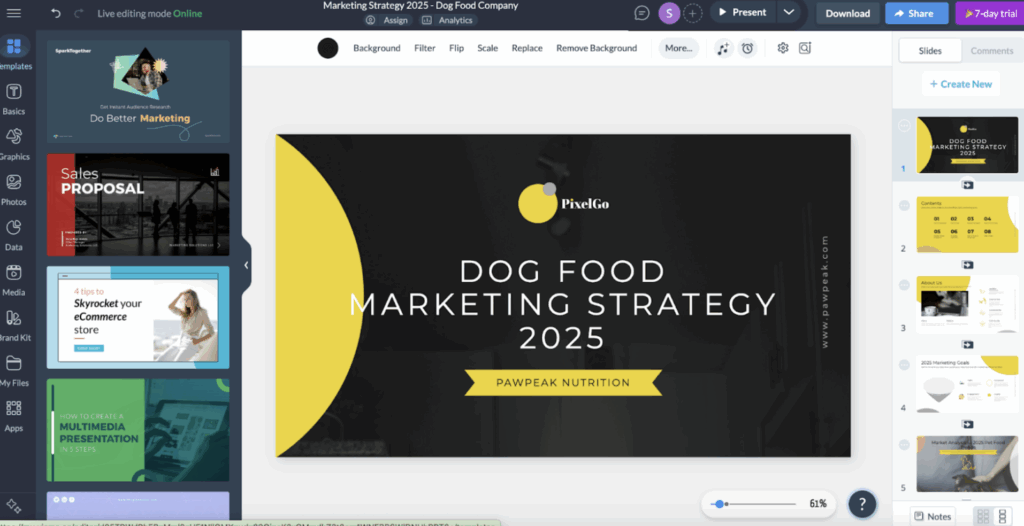
Plus AI generated slides directly inside Google Slides with no platform switching, which is what interested us in trying out the tool. However, one major drawback is that we had to input our credit card information even for a free trial. Coming up against a paywall wasn’t a great first experience.
Content was well-organized into labeled sections. The trade-off is design depth. Layouts are limited by what Google Slides can render, so there are no gradients, layered elements, or responsive spacing adjustments. It makes Google Slides better; it doesn't make it feel like a purpose-built presentation design tool.
We tried out the same prompt as Prezi AI, and the output was decent, but it needed additional tweaks to make it ready to present. The “Remix” slides option was tempting, but after trying it out a few times, we ended up reverting to the original slides it created.

Canva
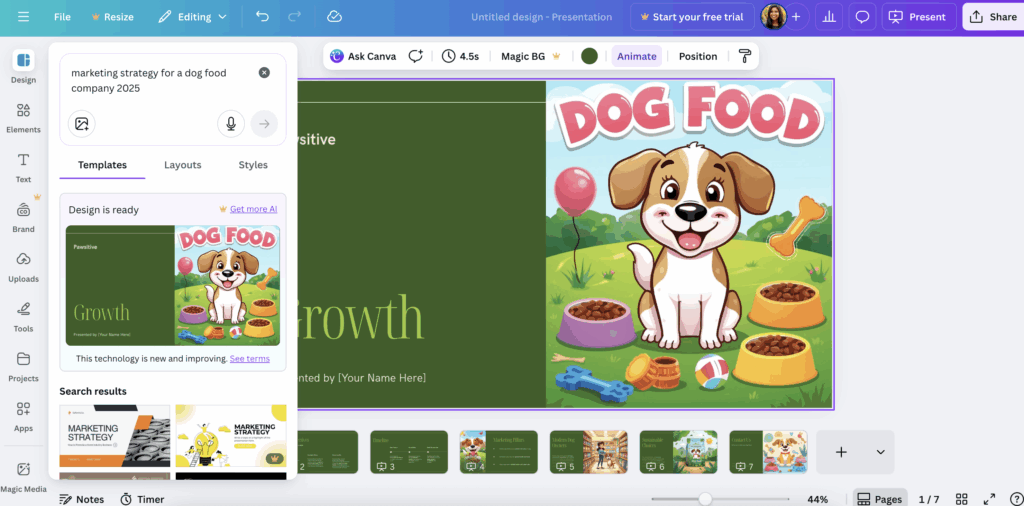
Canva's Magic Design suggested template-based layouts from its large library. Some looked strong as starting points; others felt generic. The AI output for our prompt produced mostly headers and bullet points rather than charts, timelines, or structured layouts. Editing requires traditional drag-and-drop — when you delete a bullet, spacing doesn't auto-adjust. The real value of Canva is that a subscription also covers social graphics, video, and marketing materials, not just presentations.
Google Slides with Gemini
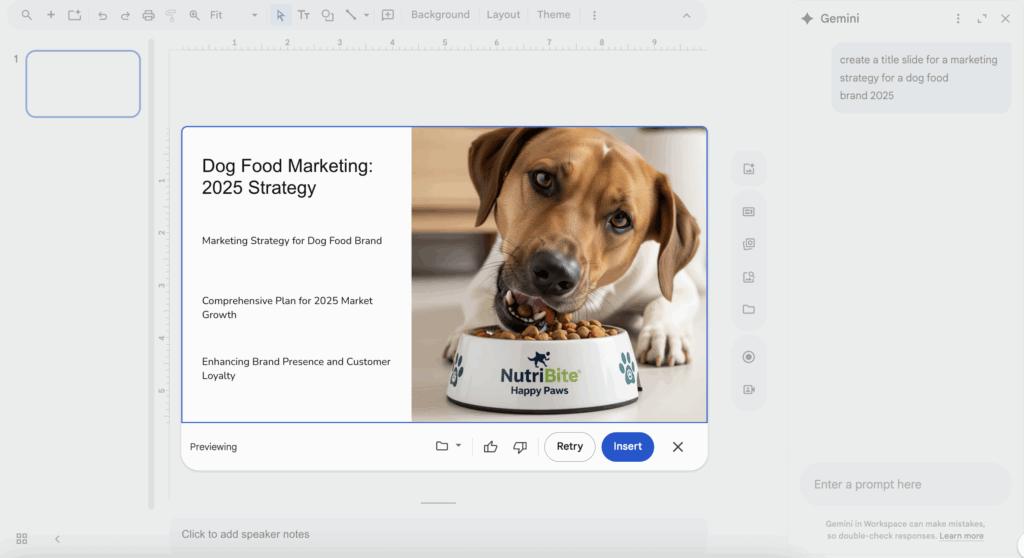
Gemini only generated one slide at a time rather than a full deck from a single prompt, which required us to adjust our approach. The resulting slides were text-heavy and felt more like title suggestions than finished presentation slides. For teams already in Google Workspace, the integration is seamless, but don't expect Gemini to replace a purpose-built AI presentation tool.
We also tested the image generation feature within Google Slides, which produced good results, though generating additional variations or viewing more options took some time.
Gamma
Gamma returned a detailed outline before generating, giving you a chance to adjust the structure and slide count. The resulting deck was clean and visually appealing with a good widget library. The main limitation: customizing slide structure is more restricted than it appears, you can't freely drag and drop, you select from Gamma's layout choices. The scroll-based web format also doesn't translate well to a live 16:9 presentation environment.
While editing, I needed to talk to the AI agent to make any AI-optimized changes within the images or text, which took some time. I noticed that customizations within slide structure were more limited, and it was hard to edit, as you couldn’t drag and drop, and had to select from Gamma’s choices.

Beautiful.AI
Beautiful.AI produced a clean, well-structured first draft. The Smart Slides concept — slides with built-in design rules that prevent ugly layouts — means text auto-resizes and elements snap into consistent positions. Post-generation editing is manual and menu-driven rather than AI-assisted, which can feel limiting if you're used to conversational editing tools. Brand controls are the genuine strength here.
Microsoft Copilot
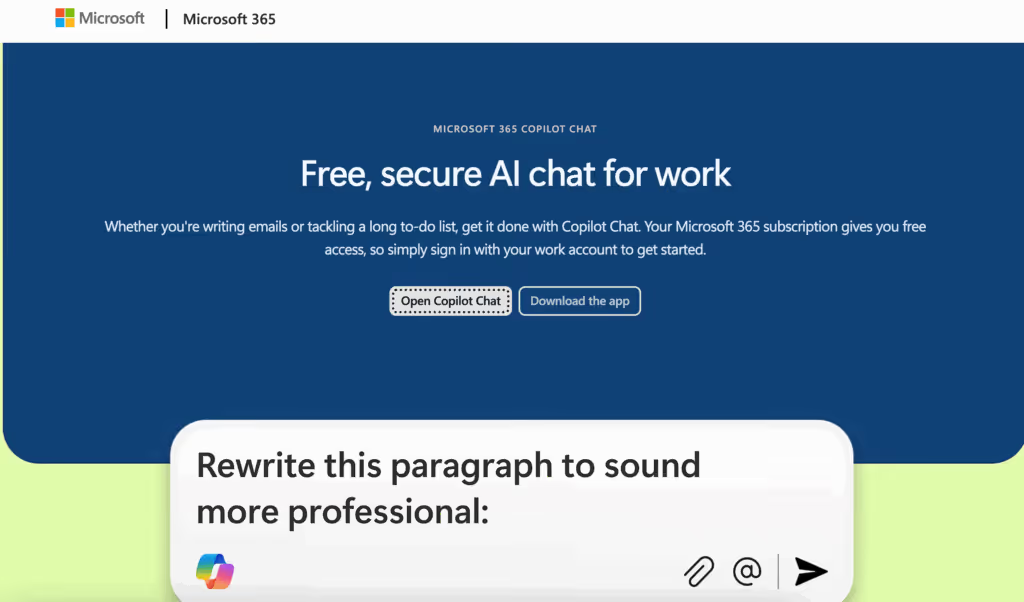
Copilot generated a structured deck quickly with relevant section headers and concise text per slide. The experience felt natural for anyone already in Microsoft 365. Content quality depended heavily on the complexity of the prompt and available Microsoft data sources. We were unable to fully test without a Microsoft 365 Copilot subscription.
Presentations.AI
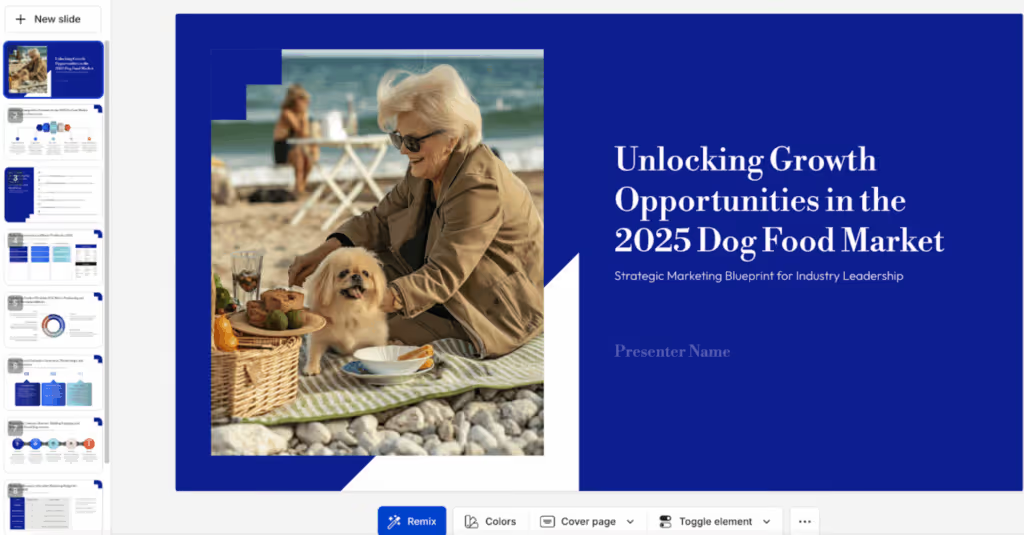
Presentations.AI asked a few audience and context questions before generating, which helped tailor the structure. Slides were clean but text-heavy, and visual options were limited. The "remix slides" feature reformats layouts with a click but stays within pre-set options — free movement of elements wasn't possible. Best for straightforward corporate presentations where speed matters more than design depth.
Pitch
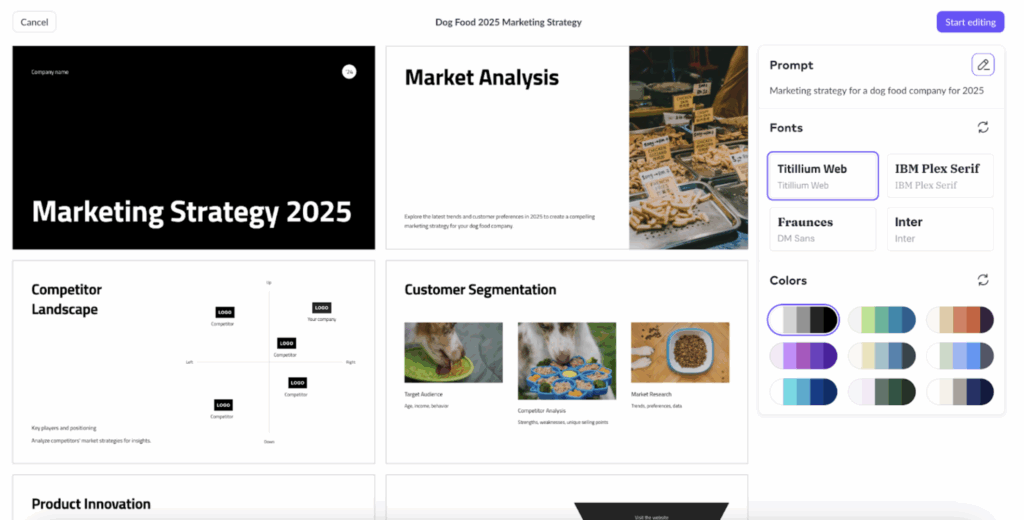
Pitch generated a decent first draft but the template wasn't able to personalize deeply based on the prompt content. The paragraph-style body text felt dense for a presentation slide. Where Pitch stands out is post-creation: Pitch Rooms let you bundle the deck with supporting materials, and analytics show exactly which slides prospects viewed and for how long.
How we tested these AI presentation tools
To ensure this list of the best AI presentation tools in 2026 is both accurate and useful, we followed a structured evaluation process. Our team tested each AI presentation maker using the same structured process:
1. Hands-on testing with the same prompt:
Every tool was tested using the prompt: "Create a marketing strategy for a dog food company." This ensured a consistent basis for comparing AI output quality, structure, visual depth, and editing experience across platforms.
2. Evaluation criteria:
We scored each platform across several key factors:
- Ease of use & learning curve: How intuitive and fast is it to create a presentation?
- AI-powered content generation: Does it generate slides, text, or visuals automatically?
- Visual storytelling & design flexibility: Are the AI-generated layouts and visuals presentation-ready?
- Branding and customization: Can users easily modify slides and maintain brand consistency?
- Collaboration features: How well does the tool support teams and real-time editing?
- Pricing & Accessibility: Are there free AI-powered plans or trials available?
3. Real-world audience scenarios:
We evaluated how each AI presentation tool performs for educators, marketers, business professionals, and students, ensuring that recommendations suit both professional and creative use cases.
By combining first-hand testing, structured scoring, and unbiased comparison, we aim to give readers a trustworthy, research-backed guide to which AI tools are best for creating presentations in 2026.
The 10 best AI presentation tools (Full breakdown )
1. Prezi AI - Best Overall AI Presentation Maker
Best for: educators, marketers, sales professionals, and anyone presenting live or on video calls.
Prezi AI is the strongest all-around option in this test. It generates a complete presentation from a single prompt, with visuals, structure, and thematic consistency, and its dynamic format does something no standard slide tool can: it groups ideas spatially so your audience sees how concepts relate, and easily make connections.
The AI tools go beyond generation. Once your deck exists, you can use AI to rephrase, shorten, or adjust the tone of any section without leaving the editor. You can also upload an existing PowerPoint or PDF and transform it into a Prezi — useful if you have legacy decks that need a refresh.
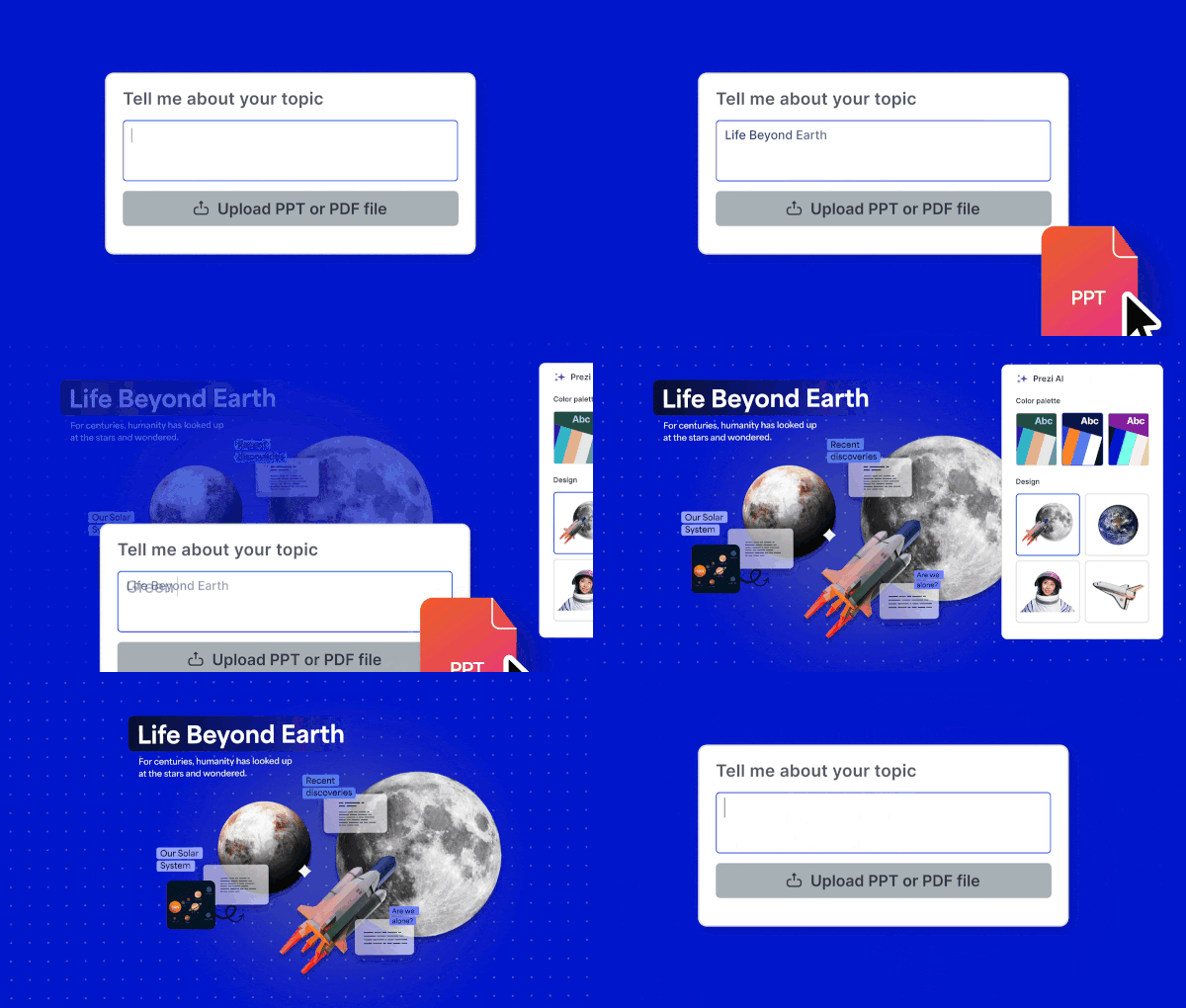
Prezi AI takes traditional slides to the next level with a more dynamic presentation format that makes it easy to guide your audience through ideas, lessons, or projects. In fact, 4 out of 5 users say that Prezi’s format is more engaging and memorable for their audience compared to traditional slides.
With Prezi AI, you can generate a complete presentation with a single prompt in seconds. After adding in a simple prompt or upload a file, Prezi AI will instantly produce a clean, well-structured outline with visuals. From there, you can refine the content, adjust colors, and choose from a range of design themes.
Once you’re editing, Prezi AI helps polish your presentation with text enhancement, tone adjustment, and AI-generated images. With Prezi, you can move fluidly from the big idea to the fine details, guiding your audience through an engaging visual narrative. Prezi AI makes it easy to integrate into your workflow, taking care of content creation from idea conception to presenting. Prezi also stands out for its video presenting capabilities, which keeps you on screen with your content, making it perfect for online or hybrid meetings.
Additionally, Prezi stands out with how it makes you look for live and remote presenting. Prezi Video keeps you visible on screen alongside your content during Zoom calls, webinars, and hybrid meetings, your face appears next to the slides rather than behind a shared screen. For educators, salespeople, and anyone who presents frequently, this is a meaningful differentiator.
Key features:
- AI-assisted slide generation from a prompt, file upload (PPT, PDF, DOC), or outline
- Smart rewriting and tone adjustment for any section of text
- Prezi Video: overlay your content next to you on screen during remote presentations
- Brand customization: change fonts, colors, and design themes in a few clicks
- Analytics: track viewer engagement on shared presentations
- Real-time collaboration with team members
Pros:
- ✅ Visually dynamic format
- ✅ Ability to transform existing files (PPT, PDF, DOC)
- ✅ Built-in AI creation tools
- ✅ Video mode for hybrid presenting
Cons:
- ⚠️ Slight learning curve for traditional slide users
Pricing:
- Free plan: up to 5 projects / 500 credits
- Plus ($19/month): AI tools, PowerPoint import, unlimited AI credits
- Premium ($29/month): Analytics, offline access, unlimited AI credits
- EDU plans start at $4/month
2. Visme - Works for data-heavy presentations
Best for: businesses and educators handling complex, data-heavy content
Visme combines data visualization with AI content tools for complex, information-dense presentations. It has over 50 types of data widgets, allowing users to build charts, graphs, and infographics that most other tools don't have.
The trade-off is speed and simplicity. When we tested our prompt, Visme asked us to choose a template before generating, adding a step other tools skip. AI generation was noticeably slower than competitors, and the initial formatting required manual adjustments. Some AI capabilities also take you out of the main editor, which fragments the workflow.
Visme is good for anyone looking for a tool with preset presentation templates and some interesting visualization capabilities. Overall, the tool would be good for anyone who is focused on more graphics and data visuals, but customization may be more manual.
Key features:
- 50+ data visualization widget types
- Animation and interactivity options
- Brand kit and collaboration tools
- Presentation analytics
Pros:
- ✅ Good for data storytelling
- ✅ Wide range of media integrations
- ✅ Team-ready management tools
Cons:
- ⚠️ Limited templates feel less modern
- ⚠️ Slightly steeper learning curve
- ⚠️ Slower AI generation
- ⚠️ No free plan
Pricing:
Starter $29/mo · Pro $59/mo
3. Plus AI - Works for Google Slides and PPT users
Best for: sales, marketing, and consulting teams already using PowerPoint or Google Slides
Plus AI works as an add-on inside Google Slides and PowerPoint, so there's no new platform. You generate slides directly inside the tool your team already uses, and all existing collaboration features work natively. For teams with established templates and workflows, this is the path of least resistance.
The standout feature is Live Snapshots: embed a live screenshot from any app or dashboard directly into a slide, then refresh it with one click. For recurring presentations like monthly reports or QBRs, this saves significant manual update time. This is a cool idea, but if your dashboard has a lot of additional data, it may be too overwhelming for your audience.
The limitation is design ceiling. Plus AI makes Google Slides better, but it doesn't make it feel like a purpose-built design tool. Layouts are constrained by what the underlying platform can render, so if visual quality is your priority, you'll hit a ceiling quickly.
Overall, a good presentation tool, but it requires more editing before it can be presented to an audience.
Key features:
- Slide remix for new layouts
- Works natively inside Google Slides and PowerPoint — no new app
- Saved prompts and context for recurring decks
Pros:
- ✅ Great for reformatting or refreshing decks
- ✅ Smooth brand and layout consistency
- ✅ Add on for Google Slides and PowerPoint users
Cons:
- ⚠️ Limited visuals compared to tools like Canva or Prezi
- ⚠️ No forever-free plan, 7-day trial requires a credit card
Pricing:
Basic $10/mo · Pro $20/mo · Team $30/mo per user
4. Canva - Good for social work
Best for: marketers, educators, and freelancers who need one tool for presentations, social content, and design
Canva's strength is breadth, not depth. A single subscription covers presentations, social media graphics, video content, marketing materials, and more.
As a standalone AI presentation tool, it's decent but not exceptional. Magic Design suggests template-based layouts, but our test prompt produced mostly headers and bullet points rather than charts, timelines, or structured visual layouts. Editing is drag-and-drop with no responsive canvas, so spacing adjustments after deleting or adding content are manual.
Overall, we found that Canva continues to excel in graphic design more than in presentation creation.
Key features:
- Drag-and-drop templates
- Magic Write (AI text) & Magic Design
- Brand kits and custom fonts
- Export as video, PDF, or slideshow
- Stock media library with millions of photos, icons, and videos
Pros:
- ✅ Beautiful, on-brand designs fast
- ✅ Excellent for repurposing content
- ✅ Vast asset library
Cons :
- ⚠️ AI-generated presentations are a starting point, not a finished product
- ⚠️ Lacks presentation-specific building blocks like timelines or comparison diagrams
- ⚠️ Weak data visualization tools
Pricing:
Free plan · Pro $15/mo · Teams $10/user/mo
5. Google Slides (with Gemini) - Good for Google Workspace Teams
Best for: Teams already using Google Workspace who value simplicity and collaboration
For teams already in the Google ecosystem, Slides is often the default choice, and Gemini adds a layer of AI capability without requiring a new tool. It generates text, suggests layouts, and creates images within the familiar Slides interface.
The limitation we found in testing: Gemini generates one slide at a time rather than a full deck from a single prompt. The resulting slides were text-heavy and felt more like title suggestions than finished presentation designs. If you need Google's ecosystem integration and are already paying for Google AI Pro, it's a reasonable option. If you need AI to produce a complete, polished deck from one prompt, it's not the right tool.
Key features:
- AI text-to-slide generation from Docs or prompts
- Collaborative editing and comments
- Integration with Gmail, Drive, and Meet
- Built-in voice presentation and translation
Pros:
- ✅ Seamless Google integration
- ✅ Easy for remote teams
- ✅ Familiar interface
Cons:
- ⚠️ Basic visual options compared to dedicated design tools
- ⚠️ Fewer AI creative features than Prezi or Gamma
- ⚠️ Does not create full presentations, one slide at a time
Pricing:
Free with Gmail; included in Google Workspace (from $6/user/month)
6. Gamma - Good for document creation
Best for: Writers, product marketers, and teams building narrative reports shared over email or Slack
Gamma's free tier gives you 400 credits without a credit card required.
The scrollable, web-style format looks modern and works well for decks shared asynchronously. You can embed Figma files, Airtable bases, and live content directly into presentations. The AI editing tools let you rework text and images inline.
The main limitation is that Gamma is built for scrolling, not presenting. When we tried to create a standard 16:9 deck, it struggled to stay within that format, and when it succeeded, content was often packed too tightly. If your deck gets presented live in a meeting room, Gamma is the wrong tool.
Overall, it created a professional-looking presentation with some good AI features, but it was more limited in being able to edit the slides to my preferred format.
Key features:
- Prompt-to-deck generation
- Built-in AI image creation
- Google Docs import
- Audience analytics and engagement tracking
Pros:
- ✅ Fast prompt-to-deck workflow
- ✅ AI credits on a free plan
Cons:
- ⚠️ Feels more like a document builder than a deck maker
- ⚠️ Limited animation options
- ⚠️Hard to customize, templates and layouts are rigid
Pricing:
Free plan (400 credits) · Plus $8/mo · Pro $18/mo · Ultra $100/mo
7. Beautiful.AI - Helps with Team Branding
Best for: Enterprise teams with established brand guidelines creating recurring structured decks
Beautiful.AI's Smart Slides are the differentiator: slides with built-in design rules that prevent bad layouts. Text auto-resizes. Elements snap into place. Colors stay consistent. For teams where everyone creates presentations and brand compliance matters, these guardrails are genuinely valuable.
The AI generates a reasonable first draft, but then editing is manual. There's no conversational AI editing after generation, so refinements happen through point-and-click menus rather than natural language instructions. The Smart Slides can also feel restrictive if you need to add content outside a template's preset structure.
Beautiful.ai doesn’t have a free version of its tool to test its AI features, so we had to sign up for a free trial to test it. The slides they suggest seem well structured and neat through their Smart Templates. However, customizations seem to be pretty limited, and it was difficult to make tweaks like moving text boxes/images or adding new content to a slide.
However, Beautiful.ai may be less suitable for audiences that want more freedom in how they create presentations or customize slides. It’s less ideal for complex ideas/topics or presentation structures.
Key features:
- Smart slides auto-adjust to content
- Built-in charting and data tools
- Collaboration workspace
- Voice-over and feedback options
Pros:
- ✅ Layout automation
- ✅ Ideal for recurring updates
- ✅ Clean, professional visuals
Cons:
- ⚠️ Limited offline access
- ⚠️ Less control for custom design
- ⚠️ No free plan to try out
Pricing:
Pro $12/mo · Team $50/user/mo
8. Microsoft Copilot (PowerPoint) - Best for Enterprise Office Users
Best for: Enterprise users and professionals creating formal business decks inside Microsoft 365
Microsoft Copilot integrates directly into PowerPoint as part of the Microsoft 365 ecosystem. It generates full decks from text prompts, suggests layouts, and refines existing slides, all inside the tool your organization already uses. For companies standardized on Microsoft 365, this removes any switching cost.
The depth of AI output depends heavily on prompt quality and what data is available across your Microsoft applications. We were unable to provide a full review without a Microsoft 365 Copilot subscription, but initial results were structured and aligned with standard business presentation formats.
Microsoft Copilot integrates directly into the Microsoft 365 ecosystem, offering AI support across tools like PowerPoint, Word, and Excel. Within PowerPoint, Copilot is designed to assist users by generating entire presentations from text prompts, suggesting layouts, summarizing content, and refining design elements.
We were unable to provide a thorough review of Microsoft Copilot because we could not try PowerPoint and Microsoft Copilot without having a Microsoft Office subscription.
Key features:
- “Draft with Copilot” presentation generation
- AI rewriting and summarization of slides
- Excel data visualization integration
- Enterprise-grade privacy and compliance
Pros:
- ✅ Deep integration with the Office ecosystem
- ✅ Excellent for corporate decks
- ✅ Consistent enterprise security
Cons:
- ⚠️ Design output feels traditional
- ⚠️ Only available with Microsoft 365 Copilot subscription
Pricing:
Included with Microsoft 365 Copilot (approx. $30/user/month)
9. Presentations.AI - Good for simple decks
Best for: professionals or students needing clean, text-heavy corporate presentations quickly
Presentations.AI focuses on fast, clean deck creation with minimal setup. It asks a few audience and context questions before generating, which helps tailor the structure, and can pull content directly from a website URL, which is useful for business users who want company context baked in automatically.
The output is structured and clean, but visually simple. Most slides default to text-heavy layouts with limited design variation. The "remix slides" feature reformats layouts, but free movement of elements isn't possible, and visual customization stays within preset options.
Key features:
- Clean templates to choose from
- Cloud storage and sharing
- Cross-platform support
Pros:
- ✅ Easy onboarding
- ✅ Clean UI
- ✅ Fast results for beginners
Cons:
- ⚠️ Limited creative control
- ⚠️ Less robust for large projects
- ⚠️ Limited editing features
Pricing:
Free plan · Pro $12/month · Gold $83/month
10. Pitch - Works for collaborative teams
What it does: Pitch combines modern presentation templates with collaboration, enabling async updates, live sharing, and embedded video walkthroughs.
Who it’s for: Startups and freelancers looking to build basic decks with teams.
Pitch is built mostly for users who are looking to make formatted decks without much personalization needed. I used AI to build a deck based on our prompt “Marketing strategy for dog food company. The template Pitch provided wasn’t able to personalize based on my prompt and gave me a generic template, which was a decent starting place. There also wasn’t space to edit the template besides some colors and font styles.
In the editor, I could drag and drop elements, or add in things like Charts, Shapes, and Tables. While editing the presentation, there didn’t seem to be many AI features to help edit content, and I needed to manually edit many parts. Pitch does have some unique recording and collaboration features that teams may find valuable. For example, I was able to record myself to explain the slide content that I could then overlay onto the slide itself. Overall, Pitch seems similar to a typical slide tool like PowerPoint, with some additional features that some users might find valuable.
Key features:
- Real-time co-editing and permissions
- Video recording capabilities
- View tracking and analytics
- Templates and version history
Pros:
- ✅ Easy-to-use UI
- ✅ Good for asynchronous presentations
- ✅ Collaboration-first design
Cons:
- ⚠️ Lacking AI features
- ⚠️ Limited images
- ⚠️ Basic templates and presentation designs
- ⚠️ Occasional sync delays
Pricing
Free · Pro $25/month (2 editors) · Business $100/month (5 editors)
What is the best AI presentation maker?
Prezi AI stands out as a frontrunner for the top AI presentation tools. Prezi’s AI functionality sits atop its creative, zoomable experience, enabling you to:
- Start from a short prompt or upload a file, and instantly generate a custom presentation outline and visuals.
- Use AI to refine text (shorten, clarify, rephrase) or convert your body copy into a “visual story” using Prezi’s dynamic canvas.
- Maintain your brand by changing fonts, colors, and design in a few clicks.
- Recreate the presentation with a new prompt if you’re not satisfied with the first output.
- Leverage Prezi’s unique storytelling format, rather than conventional slides, for a more engaging flow.
In short, Prezi AI blends generative AI with Prezi’s visual storytelling approach, making it a truly standout option in top AI presentation tools comparisons.
How can AI make a full presentation for me?
AI presentation makers leverage algorithms to analyze your content and suggest relevant visuals, fonts, and layouts. This takes the guesswork out of design and helps you create a cohesive and professional look. Plus, some tools can even generate content, offering bullet points, text suggestions, and even entire sections of text to help you overcome writer's block and craft a compelling narrative. This is particularly helpful when you're short on time or need a fresh perspective.
AI presentation tools have evolved from simple slide generators to intelligent assistants that can:
- Draft outlines from short prompts
- Suggest visuals and design layouts
- Generate text, summaries, and talking points
- Maintain your brand style across decks
What features should I look for when choosing an AI presentation maker?
AI presentation software offers several helpful features to streamline the presentation creation process. Let's explore some key functionalities that can transform how you design, build, and deliver presentations.

AI-assisted generation
The best tools go beyond text-to-slide conversion. Look for AI that understands presentation structure — generating a coherent outline, choosing appropriate visual formats (charts vs. diagrams vs. image layouts), and keeping narrative consistency across slides. Prezi AI, Gamma, and Plus AI all handle this well. Tools like Presentations.AI and SlidesAI tend toward text-heavy output that needs more manual work.
Design quality and flexibility
There's a wide gap between tools that produce generic bullet-point slides and those that apply professional design principles. Look for responsive layouts that adjust when you add or remove content, and access to presentation-specific elements like timelines, comparison diagrams, and data charts rather than just text boxes.
Iteration and editing
How you refine a deck matters as much as how you create it. AI-native editing, where you describe a change in natural language and it executes, is a significant time saver over menu-driven manual editing. Also look for context-aware AI that remembers what you established earlier in the deck, so edits don't break consistency on other slides.
Export and compatibility
If your organization uses PowerPoint or Google Slides, check export quality carefully. Some tools lose formatting, animations, or font choices on export. Plus AI and Microsoft Copilot avoid this entirely by working natively inside those platforms. Prezi supports both PPT import and export as well as PDF export, making it straightforward to move between Prezi and PowerPoint workflows.
Analytics and sharing
For sales teams and anyone who shares decks without presenting live, viewer analytics are valuable. Prezi, Gamma, Pitch, and Beautiful.AI all offer engagement tracking. Pitch's analytics are the most detailed for sales workflows; Prezi's are the most useful for understanding which sections of a live presentation resonate.
How can AI improve presentations?
Creating presentations often feels like a balancing act. You’re juggling content creation, design, and delivery, all while hoping to make a real impact on your audience.

AI presentation tools can help streamline this process. Let's explore how these tools can elevate your presentations:
Create visual appeal
We all know that visuals are key to a memorable presentation. A cluttered slide with too much text can lose your audience’s attention quickly. AI algorithms can analyze your content and suggest layouts, fonts, and images to create visually appealing slides. This means you can achieve a professional and polished look, even without a design background.
Get data-driven content recommendations
Sometimes, the hardest part of creating a presentation is knowing where to start. Writer's block can hit anyone. AI can help you overcome this by generating ideas, bullet points, and even entire sections of text. This isn't about letting the AI take over; it's about having a helpful starting point and ensuring your content is relevant and engaging.
Compare AI presentation tool pricing
When evaluating which AI tool is best for presentations or general use, pricing models matter almost as much as features. You can start small. Many AI presentation tools offer free tiers or trial periods. But, if a free plan doesn’t offer everything you need, most platforms offer various subscription tiers.
For larger organizations, enterprise solutions often provide the most comprehensive tools and support. Enterprise solutions often come with custom pricing, so it’s best to contact the sales team directly to discuss your organization’s specific requirements.
Make the most of AI presentation tools
Now that you’ve chosen your AI presentation maker, learn how to use its features effectively. These tips apply to most AI presentation software, so feel free to experiment and find what works best for you.

Use AI-generated content effectively
AI can help you create engaging presentations, even if writing isn’t your forte. Use AI features to generate ideas, talking points, and even full sections of text. This can help you overcome writer's block and develop a strong narrative for your presentation. Prezi AI seamlessly integrates AI content generation with a unique storytelling engine. Edit and refine the text to ensure it aligns with your message and resonates with your audience. AI tools can also automatically format text, adjust spacing, and apply consistent branding, creating a professional look. This automation frees up your time to focus on the substance of your presentation.
Customize AI suggestions
While AI is a powerful tool, it’s important to maintain control over your presentation. Don’t be afraid to customize the suggestions the AI provides. Think of AI as your assistant, not your ghostwriter. You can use AI editing tools to remix slides, rewrite content, and even produce new images. This flexibility ensures your presentation accurately reflects your vision and effectively communicates your message. Remember to review the terms of service for any AI presentation maker you use, as some free plans may restrict storage and access to advanced tools.
Use advanced features
Many AI presentation tools offer advanced features that can significantly enhance your workflow and the quality of your presentations. Some platforms use AI to generate entire presentations quickly, leading to a dramatic reduction in creation time and a noticeable improvement in design quality. Take advantage of these opportunities to discover how AI can elevate your presentations. You might be surprised by how much you can accomplish with these tools.
Take your presentations to the next level with AI
AI presentation tools are revolutionizing the way we create and deliver slides. From automating design and generating content to enabling real-time collaboration, these tools help you save time while making your presentations more engaging and impactful. Among the top AI presentation tools, Prezi AI stands out for its unique, dynamic canvas and powerful AI features that transform your ideas into visually compelling stories.
Ready to elevate your presentations? Try Prezi AI today and experience how AI can turn your next deck from ordinary to extraordinary.
Frequently Asked Questions
Why should I use an AI presentation tool?
AI presentation tools can significantly reduce the time and effort required to create engaging and professional presentations. They automate tasks like design, layout, and even content generation, allowing you to focus on refining your message and delivery. This is especially helpful for those who may not have extensive design skills or struggle with writer's block. These tools can also help ensure brand consistency and provide data-driven insights to improve your presentations over time.
Which AI presentation tool is right for me?
The best AI presentation tool depends on your individual needs and preferences. Consider factors like your budget, existing software ecosystem (e.g., PowerPoint, Google Slides), and the types of presentations you typically create. If you value dynamic and visually engaging presentations, Prezi might be a good fit. Want to prioritize seamless integration with existing tools? Then maybe consider Plus AI for PowerPoint and Google Slides. For those where budget is a primary concern, explore free or freemium options like Gamma. Testing different tools through free trials is highly recommended.
How can I effectively use AI-generated content?
Treat AI-generated content as a starting point, not a finished product. While AI can provide valuable suggestions for text, layouts, and visuals, it's essential to review and customize the output to ensure it aligns with your message and target audience. Fact-check any data or research presented by the AI and inject your own creativity and expertise to make the presentation truly your own.
What are the common challenges of using AI presentation tools, and how can I overcome them?
One common challenge is finding the right balance between leveraging AI capabilities and maintaining your own creative control. Remember that AI is a tool to assist you, not replace your own expertise. Another challenge is ensuring the accuracy of AI-generated data and information. Always double-check facts and figures, especially when dealing with research or technical content. Finally, technical issues can occasionally arise with any software. Consult the tool's help documentation, FAQs, or customer support for troubleshooting assistance.
Where can I find discounts or special offers for AI presentation software?
Many providers offer discounts for students, educators, businesses, or seasonal promotions. Check the company's website, subscribe to their newsletters, or follow their social media channels for updates on special offers. You can also explore deal aggregator websites like AppSumo for potential discounts. Always review the terms and conditions of any offer to understand its scope and limitations.to understand its scope and limitations.