Research Vessel Presentation
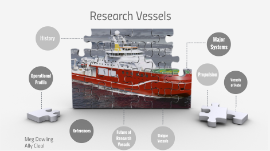
Transcript: --------- ------------ --------- Research Vessels --------- --------------- --------- --------------- --------- Meg Dowling Ally Cleal Operational Profile Fisheries & marine life surveys Silent operation Trawling Biomass scanning Atmospheric & geological (seafloor) data collection Mapping ocean floor Sub-floor surveys Hydrographic surveys Current profiler Surface & wave data Operational Profile Drop keel, SSPA Sweden Current Profiler, USGS Seafloor Mapping with Multibeam echosounder, geoprojekt.me In general, Research Vessel capabilities include: Long endurance Various operational conditions Towing Dynamic Positioning (DP) Cruising Emergency speeds Ice Space for labs Wet, dry, chemical, water sampling, bio, and computer lab Redundant communications & positioning technologies Versatility of purpose Wood's Hole Oceanographic Institute History History HMS Challenger (1872-76 Expedition) First ship to be modified for science Collected oceanographic data US Steamer Albatross Built in 1882 for U.S. Fish Commission First ship constructed with sole purpose for oceanographic research First US Government Vessel equipped with electricity Albatross, U.S. Bureau of Fisheries HMS Challenger Upper Deck, Library of 19th Century Science Sensor buoys now record observational data around the globe (Argo Float) Research vessels now employed in active tasks: Seafloor mapping Seismic surveys (for oil industry) Fisheries & marine life surveys Remotely Operated Vehicle (ROV) and manned submersible support Mobile oceanography, hydrography, and atmospheric surveys From Data Collection to Active Tasks Global Argo Floats, argo.ucsd.edu Major Systems Major Systems Major Systems onboard research vessels include: Winches Overside handling equipment Moon Pools Drop Keels Acoustic Quieting Laboratories A machine with a drum on which a rope, cable or chain for hauling, pulling, or hoisting can be wound Drive can be manual, electric, hydraulic or pneumatic. Types of winches used in research vessels: Coring winch Streamer winch Gun winch Trawling winch Vessel deployment winch Winches Hydraulic Winches for Seismic Surveying, Ludovic Péron, 2010 Overside Handling Equipment Equipment used for the deployment and retrieval of scientific research equipment such as: Underwater Autonomous Vehicles (UAV's) Remotely Operated Vehicles (ROV's) Types of overside handling equipment typically used on research vessels: Gantry Cranes Derricks A-Frames Catchlines Schmidt Ocean Institute A large opening through the deck and bottom of research vessels. Used for: Deploying research equipment Diving missions Located near amidships Operation in rough seas or ice Moon Pools RV Western Flyer, Monterey Bay Aquarium Research Institute Equipped with scientific equipment that can be lowered and raised Provides better stability Often electrically powered by a winch Used for operations such as: Hydrographic research Collection of seawater samples Measure the speed and depths of currents Bubbler system to direct flow away from equipment Drop Keels RV Investigator, Marine National Facility Protects marine life from harmful effects of noise pollution Monitor fish at closer distances Allows for better acoustic readings Some ways to reduce noise: Elimination of gearbox Reduction of propeller-hull interaction Use of diesel-electric systems favoured Acoustic Queiting ICES 209 Specifications Require extra working deck space HVAC system to regulate temperatures inside the laboratories Freezers and refrigerators for storage Overhead deck lifting equipment (deck cranes) Modular vans can be added/removed as operations change Laboratories RV Investigator Main Deck Plan, Marine National Facility Propulsion Propulsion Diesel-Electric Drives Good for variable speeds and loading Provides constant power for working loads such as cranes & winches Can also support special propulsors like bow & stern thrusters Stadt No-Loss Shafted Diesel Electric Propulsion Stadt No-Loss Podded Diesel Electric Propulsion Pros & Cons Optimized loading Engine Redundancy Less maintenance Less space required Machinery arrangement is flexible Special propulsors improve manuverability Vibrations & noise reduced High torque at low engine speeds Less efficient than conventional system Cost of installation is higher Human safety: crew must be trained to operate different system Electrical system may weigh more Hull may need modification for podded motors wartsila.com Vessels of Note Vessels of Note R/V Atlantis R/V G.O. Sars RV Celtic Explorer RRS Sir David Attenborough Wood's Hole Oceanographic Institute Length: 83.5 m Cruising Speed: 11 knots Endurance: 60 days Complement: 38 Scientists & 22 Crew Propulsion: Diesel-electric Azimuthing stern thrusters Bow thruster: azizmuthing jet 4x Cranes & 2x Winches Launches & Services the Alvin human occupied submersible R/V Atlantis Norwegian marine research ship Super silent according to ICES 209 Length: 77.5 m Max Speed: 17.5 knots Complement: 45 Propulsion: Diesel-electric

 Prezi Present

 Prezi Video

 Prezi Design