You're about to create your best presentation ever

Cross Presentation Template Kids

Create your presentation by reusing one of our great community templates.

Cross for Kids

Transcript: Whoever believes and is baptized will be saved... -Mark 16:16 We are commanded to. Set up a meeting with Pastor Robby to make sure your child is ready. We encourage you to be baptized during a Sunday or Thursday service. All those who believe should be baptized. We do not baptize babies or young children. Pick who you would like to baptize them. When it's time in service, the person baptizing you will enter the water, followed by you. We baptize through immersion, like Christ was. Going Deeper It must be your child's choice, and theirs alone. You'll make a confession of faith. What is baptism? Baptism is a spiritual act that signifies salvation in Christ. What does it look like? You'll leave the pool and change in the changing rooms. What does "right" look like? They must be ready to live a different life. What does baptism mean for me and my child? My child wants to be baptized. Salvation is complete through baptism Everyone who is saved in the New Testament was baptized. It's about the heart not the water. Who should be baptized? On the day you are to be baptized, please bring a change of clothes. Baptizo - (Greek) to submerge, especially in the context of a naval vessel. Historically Jewish - given a new context by Christ. You will wait behind the sanctuary. A baptism class for parents and kids How do we Baptize? Schedule a Sunday or Thursday that you would like the baptism to take place on. Finally, you'll fill out a baptism form and receive your shirt. You'll be brought under the water and back up. Because we want to do it right, you and your child need to have a meeting with Pastor Robby before proceeding. Baptism is extremely important, so we want to make sure we do it right. They must understand sin and salvation. I believe that Jesus is the Christ, the son of the living God. I believe that he died for my sins and was raised from the dead. I acknowledge and accept Him as my leader and savior. Cross for Kids Baptism and Salvation Why do we Baptize? To be like Christ. It's a representation, and more.

Kids Food Template

Transcript: It was a great way to include all participants in the race to visually show the world they contributed to kids food basket --otherwise they would go relatively unnoticed-- -Constraints -Benefits -Results Volleyball Tournament Charity Car Smash Wheelchair Basketball Tin Can BeerPong Tournament Rent a Puppy (Humane Society) GVSU Treasure Hunt Promoting Mission Statement Questions? Initial Donors After the Race * Content Gathering * Linking Accounts * Set up donor info with running club * Design Campaign * Publishing Campaign Project Ideas Crowd funding Conclusion https://www.gofundme.com/turkeytrot During the Race Boost likes Creation Steps Great Coincidence Beneficial organization helping those in our community 1/4 children in Michigan are affected by hunger In Kent County, 30,000 children live in poverty We saw this as a call to action for those less fortunate in our community It's a process Tiffany Chesson Marco Diaz Spencer Jacobson Mason Porritt GVSU Turkey Trot Provided beverages and snacks to runners Welcomed and cheered runners Helped with breakdown of event Awards Ceremony Prizes Raffle Draw T-shirt giveaway Purpose GVSU Spikes Down Hunger Team 5 Course Marshalls Spencer participated Thanks for Watching!!! Update Constantly Vision FORCE EVERYONE TO SHARE THE CAMPAIGN!!!!! Met with several groups to promote the run Sigma Kappa Sigma Phi Epsilon Alpha Sigma Tau Panhellenic Meeting Community Event Friends Family Students VIDEO Kid's Food Basket To help organize and execute an annual 5k fun run aimed at bringing awareness of and raising funds to support less fortunate children. Day Before To be recognized as a group, who work with a local charity aimed at resolving childhood hunger in West Michigan. $3,120 raised!!! Maintenance On the Day 99% of crowd funding donations come from friends and family First chosen Project to pursue Tournament rules/outline done Meetings with GVSU Campus Rec. Director Awaiting the approval to use the facility Running Club has a sign up page on Michianatiming.com -Add all members from Michianatiming to the offline donation list constantly "Incredibly Tedious" - Keep updating and keep sharing Arrived early to meet the other volunteers and get assigned roles for the day Helped with set up Put together gift bags Walked course to check safety due to weather conditions Promotional Strategy To create community awareness of, and to raise money for the charity Kids Food Basket in order to help feed children from less advantaged backgrounds. ***Tip Jar Theory GVSU Turkey Trot Redirected by Campus Rec Running Club Met with Justin Davis Developed a plan of action Fundraising Marketed Managed Event Participated GOFUNDME!!! Finalize details for course of day Organizing data into Excel Sheet Marking the course Chalk on sidewalks Set up tables

Cross Culture Kids

Transcript: Children adopted by parents from another country other than the one of that child’s birth Bi/Multi Cultural or Bi/Multi Racial Children whose parents are from a racial or ethnic group which is not part of the majority race or ethnicity of the country in which they live. Van Reken. Retrieved November 28, 2016, from http://www.crossculturalkid.org/who-are-cross-cultural-kids/ Wikipedia. Third culture kid. Retrieved November 28, 2016, from https://en.wikipedia.org/wiki/Third_culture_kid A Cross-Cultural Kid ( CCK) is a person who has lived in—or meaningfully interacted with—two or more cultural environments for a significant period of time during developmental years” (Van Renken, 2002). Third Culture Kids (TCKs) Children of refugees Kids in the aforementioned groups experience most of the following (Van Reken): Sudden (often repeated) change in cultural environment Nomadic life Anticipated Repartriation Identity from an organization(military, missionary) or circumstances (refugees) Different appearance compared to surrounding people Varied socio-economic status face issues such as change of lifestyle, rejection, uncertainty, prejudices, rootlessness, restlessness large world view multilingual Children born to parents from at least two cultures or races Children of minorities Children whose parents are living outside their original country or place due to unchosen circumstances such as war, violence, famine, other natural disasters Image source: career.iresearchnet.com International Adoptees Domestic TCKs "A Third Culture Kid (TCK) is a person who has spent a significant part of his or her developmental years outside the parents’ culture(s). Although elements from each culture are assimilated into the TCK’s life experience, the sense of belonging is in relationship to others of similar background” (Pollock) Common traits that these kids share with each other Cross Culture Kids Children of immigrants Children whose parents have made a permanent move to a new country where they were not originally citizens References Children whose parents have moved in or among various subcultures within that child’s home country.

Kids Huddle Template

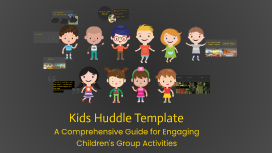
Transcript: Enhances creativity, critical thinking Implementation Steps Benefits of Using the Kids Huddle Template Improves social skills development A structured approach to effectively implement the Kids Huddle Template in educational settings. Increases motivation for learning Engagement Introduction Needs Assessment Template Customization Evaluate children's learning preferences and requirements. Present the template in an interactive and enjoyable manner to encourage participation. Adapt the Kids Huddle Template to align with specific educational goals. Success Stories Highlighting the impactful journey of the Kids Huddle Template in educational settings. 2021 2023 2022 The Kids Huddle Template was first implemented in a local school, marking the beginning of its journey to enhance children's learning. The success of the template led to its expanded use across multiple classrooms, demonstrating its broad appeal and effectiveness. Following its introduction, the template received positive feedback from both teachers and parents, indicating its effectiveness in promoting engagement. Introduction to Kids Huddle Template The Kids Huddle Template is designed to create an engaging and interactive learning environment for children. By incorporating various activities and teamwork opportunities, it enhances educational experiences and fosters a love for learning. Conclusion The Kids Huddle Template has proven to be a significant tool in enhancing children's learning experiences. By fostering interactive education, it promotes engagement, collaboration, and creativity among students, ultimately leading to more effective learning outcomes. Customizable Interactive Learning Collaborative Teachers can tailor the Kids Huddle Template to meet the diverse learning styles of their students, ensuring that each child benefits from personalized education. The Kids Huddle Template incorporates engaging activities that stimulate children's imagination and curiosity, making learning fun and interactive. The template fosters collaboration among students, allowing them to work together on projects and develop essential communication and teamwork skills. The Kids Huddle Template has transformed the way our students engage with learning! Key Features of the Kids Huddle Template Feedback from Educators Kids Huddle Template A Comprehensive Guide for Engaging Children's Group Activities

Presentation Template

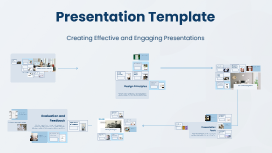
Transcript: Assets Presentation Template Creating Effective and Engaging Presentations Comment Color Schemes Color schemes impact perception and engagement. Utilizing complementary colors enhances readability and evokes emotional responses, while a consistent palette promotes professionalism and cohesiveness throughout the presentation. Why Are Presentations Important? Key Elements of a Good Presentation An effective presentation consists of clear objectives, engaging content, appealing visuals, and strong delivery. These elements work together to ensure the message is understood and retained by the audience. Presentations are a vital tool for conveying ideas and information in a concise manner. They help engage audiences, facilitate knowledge sharing, and support decision-making in various contexts, from business to education. Font Selection Storytelling Techniques Common Presentation Formats Using Data and Statistics Crafting a Compelling Conclusion Choosing the right fonts ensures readability and visual appeal. Sans-serif fonts are generally preferred for digital presentations, while contrasting font styles for headings and body text can enhance clarity. Introduction to Presentations Presentations can take various formats, including slideshows, verbal talks, and interactive workshops. Each format serves specific purposes and can be chosen based on the audience's needs and the presenter's objectives. A strong conclusion summarizes key takeaways and reinforces the significance of your message. Present a call to action, encouraging the audience to reflect or act upon the information, leaving a lasting impression. Understanding the essential features of effective presentations is crucial for successful communication. This section covers the importance of presentations, the key elements that make them effective, and how to tailor your message to your audience. Storytelling in presentations makes content relatable. Use personal anecdotes or case studies to illustrate points, weaving emotional connections that resonate with your audience and aid in memory retention of key messages. Incorporating relevant data strengthens your arguments and adds credibility. Utilize visuals like charts and graphs to present complex information clearly, ensuring that statistics are contextualized and connected directly to your overall narrative. Understanding Your Audience Setting Clear Objectives Visual Hierarchy Image Usage Creating Engaging Headlines Knowing your audience is crucial for tailoring your message effectively. Factors such as demographics, interests, and expertise level should inform the presentation's content and style for maximum impact. Defining clear objectives is essential for any presentation. Objectives guide the content and keep both the presenter and audience focused on the intended outcomes, ensuring effective communication. Visual hierarchy prioritizes information to guide the audience's focus. By varying font size, weight, and color, key points are emphasized, allowing for quicker understanding of the presented material. Images should complement the content, not overwhelm it. High-quality visuals can illustrate complex ideas, but maintaining relevance and context is crucial for impactful communication. Headlines serve as hooks to capture your audience’s interest. Craft headlines that are concise yet compelling, leveraging impactful words to convey the essence of each section, encouraging further engagement with the content that follows. Layout and Spacing Structuring Your Presentation Content Development Effective layout and spacing guide the audience's eye. Proper alignment and ample white space can enhance readability, prevent overcrowding, and create a more polished, professional appearance. A well-structured presentation enhances clarity and retention. Consider using a clear beginning, middle, and end, supplemented with transitions that guide the audience through your key points. Utilize frameworks like the Problem-Solution or Chronological approach depending on your topic. Effective content development is the backbone of any successful presentation. It involves careful structuring and engaging communication to ensure your message is understood and retained. Design Principles Effective design principles are fundamental for creating engaging presentations that hold the audience's attention. Understanding visual hierarchy, color schemes, font selection, image usage, and layout ensure that messages are conveyed clearly and professionally. Managing Nervousness Learning from Past Presentations Nervousness is common among presenters; techniques such as deep breathing, visualization, and practice can effectively manage it. Creating a clear structure for the presentation can also boost confidence and promote calmness during delivery. Incorporating Multimedia Reviewing recordings of past presentations can illuminate patterns in performance. This reflection enhances understanding of effective techniques and common

Now you can make any subject more engaging and memorable